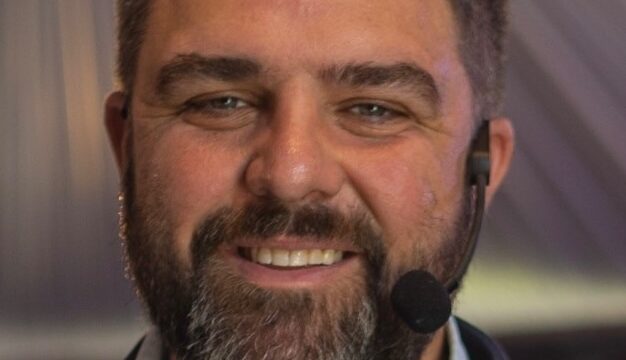
Securing Grandma’s groceries with Pierre Cadieux
This month, Amy is joined by Pierre Cadieux, Research Lead for Intelligence Efficacy at Talos. Pierre takes us back to his early days on help desks in the 90s, where learning to correlate logs between Windows and Unix systems sparked the curiosity that eventually led him to security. It’s a great look at how someone who has seen the industry evolve over decades stays grounded and keeps their edge.
We also get into what’s kept Pierre at Cisco for nearly ten years. He talks about why he prioritizes the human impact of our work, the importance of knowing when to step away from the keyboard, and how his background in anthropology actually informs the way he approaches threat intelligence today.
Amy Ciminnisi: I’ve known you since you were in Talos IR, which was not too long ago. But tell me a little bit about your professional journey, because I know that definitely was not the start of it.
Pierre Cadieux: I worked at an ISP as part of the help desk back in the mid-90s. I was one of the people who people would call up and say, “Hey, I’ve got this computer I just bought, how do I get it on the internet?” I did a lot of learning about what TCP/IP was, what networking was, how to connect things via various different types of connections — whether it be an actual hard-coded network connection or a dial-up connection — and was able to get some expertise around guiding people through that process.
Then I moved to a technology company in San Diego and worked on their help desk. One day, someone called me up and said, “You know how to read Linux logs, right? Or Unix logs, UCS logs, Linux logs.” I said, “Yeah.” They said, “You know how to use Windows — you’re a Windows Server guy, too.” I said, “Yeah.” They said, “I need you to sit in this chair, look at these two screens — one is a Windows box, one is a Unix box. I need you to be a correlation engine.”
So, I looked at the timestamps for both of them, and helped to figure out what was happening because we were having an emergency, an incident, and they had nobody that could look at both. People at that point in time in this organization were very much, “I am doing just Unix things and only know Unix things. I am Windows things only. I only know one of those things.” They didn’t cross the streams. I could talk both. So I sat in the chair, I stared at both screens and I helped them to track the timeline of what was happening, which ended up being an intrusion exploiting a vulnerable SSH server that was compromised. That changed my course into security.
I spent a number of years in internal security for a number of organizations and got into leadership positions, even CISO positions, leading security teams globally for financial services, for instance, and others. Then I moved into consulting and did that for a number of years as well.
AC: Now you are on the TI&I team, and you also just started contributing to our Threat Source newsletter. What is it that kept you here after all those years?
PC: I’m hitting my ten-year anniversary at Cisco in January. What keeps me at Cisco and Talos is the flexibility of my work. I’m able to, within most bounds, choose what I work on and how I get things done. I have a lot of flexibility in my workday, day-to-day. I work West Coast hours compared to most of my team members who are East Coast. So I sometimes work early shifts with them and am done by the early afternoon. Or sometimes I have to work with folks who are over in Asia Pacific, and I’m working later.
The mission that Talos has resonates with me deeply. One of the things that I have seen along the way was not forgetting the why behind security, not forgetting the fact that what we are defending matters to people, not just to corporations, but to people who are affected by these things. In a newsletter intro, I mentioned that at one of the places I worked, they explained to me that a certain machine was super critical because it wrote the checks that get sent out to people who are expecting this check to come in weekly, monthly, whatever — that was going to be paying for grandma’s groceries. And so that motivated me to make sure that box never went down and protect it in a very specific way. Even though it was something that probably should have been sunset and wasn’t necessarily up to snuff from a security perspective, there are things we could do to protect it that would allow it to still function as we look for a better solution. At Talos, leadership gives us the space to execute that mission in a way that makes sense for us.
Want to see more? Watch the full interview, and don’t forget to subscribe to our YouTube channel for future episodes of Humans of Talos.
Originally published on Cisco Talos