Risky Bulletin: Spyware chip found in Ledger crypto-wallets
In other news: Cyberattack defrosts supermarket fridges; Ahold Delhaize supermarkets go offline across the world; EU wants smart glasses to beep loudly when recording.

This newsletter is brought to you by cloud security firm Prowler. You can subscribe to an audio version of this newsletter as a podcast by searching for “Risky Business” in your podcatcher or subscribing via this RSS feed. You can also add the Risky Business newsletter as a Preferred Source to your Google search results by going here.
Ledger, a maker of hardware-based cryptocurrency wallets, has told customers to discard and replace devices bought from a Southeast Asian reseller named CryptoBilis.
Customers were also told to move funds stored on those wallets to new blockchain addresses as soon as possible, to avoid having the funds stolen.
The company’s warning came after blockchain security firm Tibane Labs published a report over the weekend detailing spy chips found inside Ledger Nano X wallets over the past year.
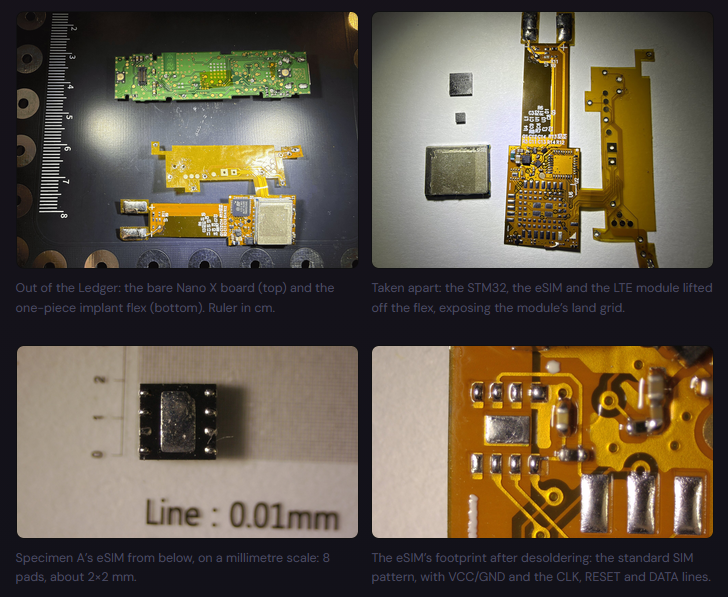
The spy chips were found soldered between the cryptographically secure element that handles cryptocurrency operations and the device’s screen.
The add-on chip intercepted what was displayed on the screen, matched the characters against a character map, and sent the collected information to a remote attacker using a built-in modem and eSIM card.
The threat actors allegedly used the collected seed phrases to access and empty cryptocurrency accounts stored on the Ledger devices.
The backdoored devices have been linked to the theft of more than $86 million in crypto assets.
Tibane researchers described the spy implant as having evolved from an amateurish soldering in devices from September of last year, to a professional job in the sample Ledger wallets spotted this year.
The hand soldering and the off-the-shelf components are both gone and replaced with a laminated flex PCB painted the same color as the regular Ledger components.
The old implants had to replace the original battery with a smaller one, so the implant had space in the casing. The newer ones leave the original battery in place and instead gain the necessary room by removing some of the foam padding.
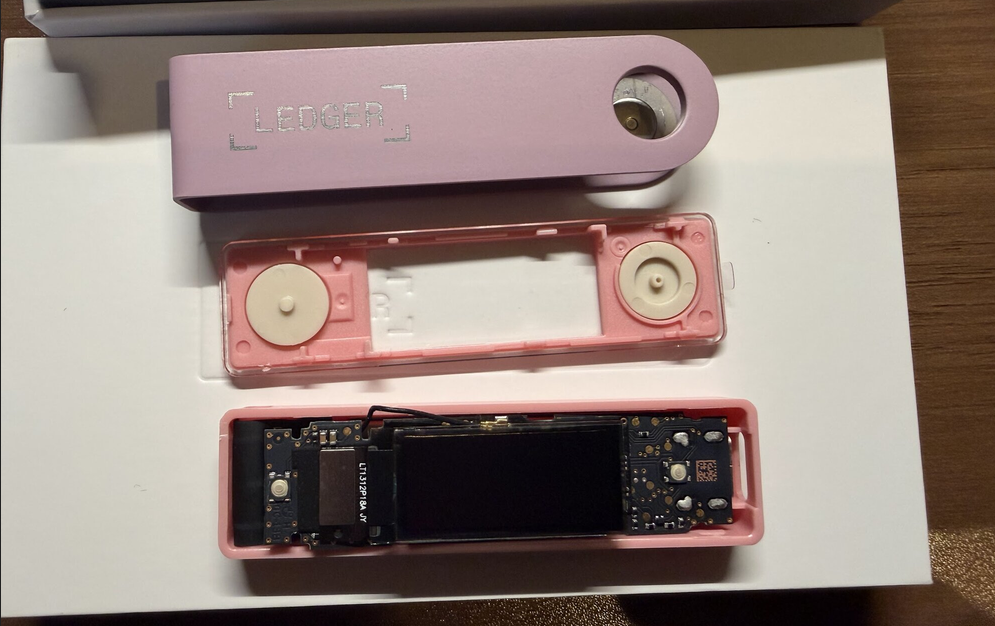
“It is the most advanced implant seen so far,” the Tibane team said. “With the case open and the screen still in place, it looks like an ordinary Nano X: the original battery, the original board edges and buttons, a normal OLED. The only giveaway is a thin black antenna wire running along the top edge.”
For now, Ledger says it stopped working with CryptoBilis until it can investigate the supply chain incident and find out what happened and who’s responsible. CryptoBilis says it’s cooperating with the company and suspended all Ledger device sales.
Responding to online backlash, CryptoBilis co-founder Arravind Prabu said he sold the company earlier this year and couldn’t disclose the deal due to an NDA. According to online reporting, the new owners are allegedly a mysterious Chinese company that told the previous owners they planned to disclose the sale later in the year but never did.
In the meantime, at least one Ledger user reported finding the same spy implant in a wallet bought in Europe, but it’s unclear if that is coming from a EU-based maker of Ledger wallets, or from a batch of Ledger devices acquired from Southeast Asia, CryptoBilis’ normal territory, and shipped to the EU to be resold or cover stock shortages.
As the reporting around the spy implant has progressed through the weekend, as of Tuesday, Ledger customers have also found the same implant in Ledger Flex wallets as well, but this is only an isolated case—for now.
Ledger Flex sold at Singapore Airport confirmed to contain a spy implant!
@BenYorke found suspicious marks on his @Ledger and sent it to me rather than using it, that was probably the best decision here.
https://t.co/aP7gDEbvtq
https://t.co/3VumJyBFD2 https://t.co/2NtXWIbJYs— Mark Karpelès (@MagicalTux) October 13, 2026
Risky Business Podcasts
In this edition of Between Two Nerds, Tom Uren and The Grugq examine how ShinyHunters and the FBI both deceived themselves into believing they were immune to cyber threats.
Breaches, hacks, and security incidents
Cyberattack defrosts supermarket fridges: A threat actor has hacked and raised the temperatures of freezers and refrigerators at hundreds of French supermarkets. The incident took place on Sunday night and caused tens of millions of euros in estimated damages to food stocks. Most of the affected freezers were owned by French hypermarket chain Intermarche, but other companies also reported issues. The attack targeted Danfoss freezers and refrigerators. The company says hackers targeted devices that ran outdated firmware. Security researchers also discovered the company was running the fridges online with their default credentials. [ZDNet France // Reuters // Flying Penguin // Kevin Beaumont // Matt Suiche]
Ahold supermarkets go offline across the world: Supermarket chains owned by the Ahold Delhaize group have gone offline across the world after a cyberattack over the weekend. The attack has primarily impacted a system used to handle online orders. The incident impacted Ahold Delhaize-owned chains like Food Lion and Stop & Shop in the US, Albert Heijn, Etos, and Gall & Gall in the Netherlands, Delhaize in Belgium, and Profi and Mega Image in Romania. [Ahold Delhaize // Albert Heijn // VRT News // Stirile ProTV]
Meta breach: A threat actor accessed Meta’s GitHub repositories and stole the data of more than 1,500 US employees. The breach took place last month and hackers also stole some of the company’s source code. Meta says the intruder used an employee’s credentials to access the repos and steal the data. The company is now notifying all those affected. [SecurityWeek]
H&M denies hack: The same hackers who breached fashion retail chain ASOS claim to have also breached H&M, but the company says an early investigation found no signs of an intrusion. [Sweden Herald]
Foschini Group hack: A third fashion store retailer, The Foschini Group (TFG), also disclosed that its UK brands, such as Phase Eight, Hobbs, and Whistles, had been targeted with cyberattacks. Unclear if these are connected to the ASOS and H&M hacks. [The Record]
SkyNet cyberattacks: Ukrainian hacking group BO Team has been DDoSing St. Petersburg internet service provider SkyNet for the past week. [SecPost]
Papertrade crypto-heist: Hackers have stolen $1.28 million worth of assets from the Papertrade cryptocurrency platform. [Papertrade // FinanceFeeds]
79th Vault crypto-heist: Hackers have stolen $12.5 million from the hot wallets of DeFi platform 79th Vault in a security breach last week. The incident has been blamed on a leaked operator key. [79th Vault // Blockonomi]
UK Housing Ombudsman Service breach: The UK Housing Ombudsman Service says a security incident at a third-party has impacted its case management system. [UK Housing Ombudsman Service]
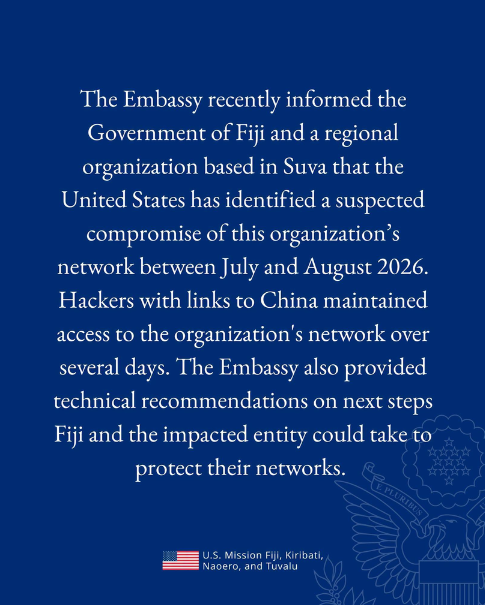
US Fiji embassy hacked: The US government says Chinese hackers breached its Fiji embassy. The hackers maintained access to the embassy’s network between July and August this year. The embassy notified the Fiji government of the breach and provided technical details so it can also investigate possible intrusions. [US Embassy Suva]
General tech and privacy
Self-replicating AI models: American AI company Anthropic says smaller-sized AI models will soon be able to self-replicate using the storage and internet connections of some IoT equipment to do so. It estimates this will happen within the next few months. [Anthropic]

Meta lets its AI agent generate porn: Meta confirmed this week that it intentionally allowed its Muse AI agent to generate pornographic materials. Yes, the company that will literally ban your accounts if you post an image of a nipple. That company. [WIRED]
Imagine sexting with a virtual Labubu operated by a company with arguably the worst privacy track record on the planet:
— Katie Drummond (@katie-drummond.bsky.social) October 12, 2026 at 11:27 PM
Norway fines Microsoft ad firm: Norway’s data protection agency has fined a Microsoft-owned ad firm 92 million Norwegian kroner (€8.6 million) for processing and sharing the personal data of Norwegian Grindr users without their consent. [Datatisynet]
Getty plans bankruptcy to go private: Getty Images says it will file for bankruptcy and file to go private as part of a restructuring agreement. [Reuters]
Valve fixes CS2 anti-cheat: Valve has rolled out a fix for a bug in the Counter-Strike 2 FPS shooter that allowed hackers to bypass its anti-cheat system. [eScore News]
The case against passkeys: An anonymous user made a solid argument against the use of passkeys, calling them a trojan horse to grant more control over user accounts to online platforms. [Non-Functional]
Firefox 158: Mozilla has released Firefox 158. New features and security fixes are included. The biggest feature in this release is the Firefox Enterprise version and support for the new JPEG XL image format.
Chinese cars record military exercise: The Norwegian military discovered that Chinese-made cars they rented for a military exercise had recorded and stored footage of their drills and the personnel’s faces. [Militarnyi // DN]

Government, politics, and policy
UK AISI gets its access back: The White House has reinstated the UK government’s access to the latest American AI models. The US cut the UK’s AI Security Institute access last month after models escaped the institute’s testing environment. The AISI has established itself as one of the most proficient and respected AI model testing organizations. [TechXplore]
EU wants smart glasses to beep loudly when recording: EU privacy regulators want smart glasses sold in Europe to make loud sounds when taking pictures or recording video. According to a set of recommendations published this week, smart glasses should also send a special Bluetooth signal when a recording starts. The signal could be used by nearby phones to alert users that they might be recorded. [EDPB]
New social media age limit laws: Turkey has banned teens under the age of 15 from social media, while Greece has introduced the legislation to also do so starting next year. [Hurriyet Daily // Greek City Times]
Poland’s Pegasus data was sent abroad: A Polish government investigation has found that data collected through the Pegasus spyware by a previous administration was allowed to be sent abroad, outside government control, in a major national security lapse. [TVP World // UA.NEWS]
Sponsor section
In this Risky Business sponsor interview, James Wilson chats with Prowler’s founder and CEO Toni de la Fuente about how AI now allows pretty much anyone to vibe-code “killer apps”. These custom apps are often internal for organisations and hosted on the cloud.
Arrests, cybercrime, and threat intel
France takes down Stryx: French authorities have arrested three teenagers who built and ran a platform that allowed users to search through hacked and stolen data. The service launched in March under the name of Reacher and rebranded to Stryx in June. It granted access to more than 730 million records under paid subscriptions. Stryx hosted data ranging from names and home addresses to bank account details and registered vehicle information. [Paris Prosecutor’s Office, PDF]
SMS blaster detained in Sihanoukville: Cambodian authorities have arrested a Chinese national for driving with a fake mobile tower in his car across the port city of Sihanoukville. [Khmer Times]

28 scam centre arrests: An international consortium of law enforcement agencies arrested 28 individuals in Ghana and Nigeria linked to cyber scam operations. The suspects were detained last week in an operation led by US and UK authorities. Officials say they acted on data collected and shared by tech companies. Authorities also seized $11 million in stolen funds and tech companies collectively suspended more than 3.7 million accounts and groups used for the scams. [DOJ]
Surprising call about tech-enabled scams with the U.S. Department of Justice today.
I heard Jeanine Pirro (whom I was previously unaware of) speaking in her role as the US Attorney for the District of Columbia, say “thank God” for tech companies.
Not a view I have heard before.
— Alexander Martin (@alexmartin.bsky.social) October 13, 2026 at 6:02 PM
Zod incident: Hackers compromised the GitHub account of the Zod JavaScript library to add malware to recent releases at the end of September, but the incident was caught early and the malware never made it to npm. [GitHub]
npm malware: The Elastic security team has found a malicious npm package (apexacc/cli) that was used in attacks against Web3 developers earlier this year. [Elastic]
New ShinyHunters leadership: A new hacker going by Hasanbr0ker has come forward to claim leadership of the ShinyHunters group after the arrest of its previous leader, Rey, in Jordan. However, security researchers don’t believe the claims, citing the lack of secure signing key material. [Arkem Cyber // SuspectFile]
“ShinyHunters isn’t a group anymore so much as a brand people fight over. The keys that were supposed to prove who speaks for it leaked, multiplied, or were forged. The people who held them are arrested, missing or accused of turning on each other. And every time someone goes down, someone new steps up and says the founders approve.”
Cobalt Strike Beacon Corpus: Fox-IT has released more than 56,000 signatures for Cobalt Strike beacons. [Fox-IT]
Malware technical reports
ICMacOS: SOCRadar looks at ICMacOS, a new macOS infostealer that has all the features to easily be called a RAT as well. [SOCRadar]
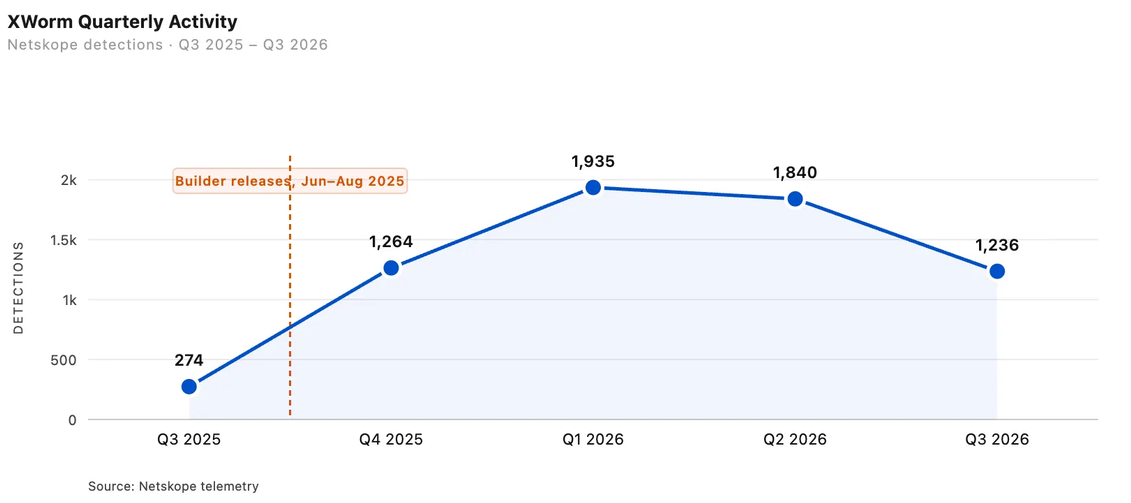
New XWorm versions: Detections for the XWorm infostealers have increased four times as the malware saw significant development this year. According to security firm Netskope, XWorm creators released four new versions and 11 plugins that greatly expanded the malware’s capabilities. XWorm now also includes a rootkit, a GPS location data harvester, and a webcam and microphone recording module—bringing it closer to a spyware strain than an infostealer. [Netskope]
Sponsor section
In this sponsored product demo, Prowler founder and CEO Toni de la Fuente walks Risky Business host Patrick Gray through the company’s open-source cloud security platform. Toni demonstrates how Prowler can identify and remediate security issues across AWS, Azure, GCP, and Kubernetes. There’s a pointy-clicky GUI interface and a CLI, and both come in handy in different ways. The Prowler platform is completely free and open source, but there is a hosted version you can pay for if you don’t want to run it yourself.
APTs, cyber-espionage, and info-ops
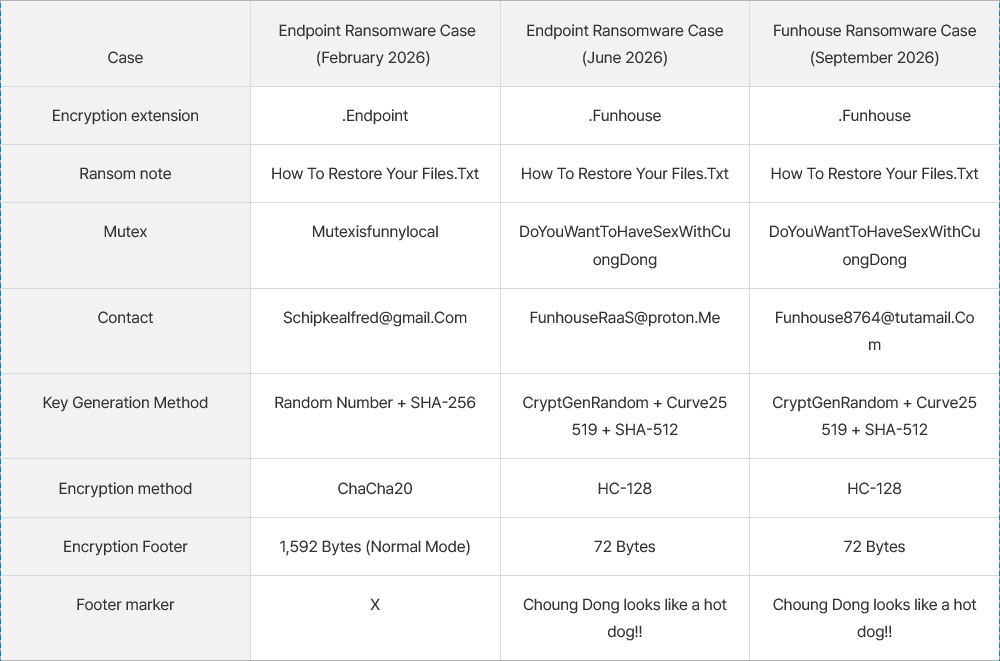
Kimsuky linked to two ransomware strains: Security firm AhnLab has linked the North Korean hacking group Kimsuky to two ransomware strains named Endpoint and Funhouse. Endpoint was deployed at the start of the year and Funhouse around September. Both are linear versions of the older Midnight, another strain linked to past DPRK operations focused on financial profits. [AhnLab // Errbody]
Vulnerabilities, security research, and bug bounty
Patch Tuesday: Yesterday was the October 2026 Patch Tuesday. We had security updates from Adobe, Microsoft, Ubuntu, SUSE, Ivanti, SAP, Citrix, IBM, HPE, Dell, Fortinet, Rockwell Automation, Schneider Electric, Siemens, Progress, Kubernetes, GitLab, Drupal, Zoom, Grafana, Commvault, DrayTek, and Firefox. Other projects and companies like Android, Samsung,Qualcomm, Huawei, HP, Cisco, AWS, WordPress, cPanel, Apache HTTP, Chrome, ASUS, Zyxel, Arista Networks, Atlassian, Citrix, Splunk, WatchGuard, MikroTik, Axis, Gigabyte, GitHub, JetBrains, SmarterMail, Django, SonicWall, Veeam, OpenOffice, wolfSSH, MongoDB, Elastic, Fortra, HashiCorp, Moxa, and Proxmox released security updates earlier this month.
Microsoft patches two zero-days: Microsoft’s Patch Tuesday this month fixed 1,411 vulnerabilities, including an actively exploited zero-day. The zero-day is CVE-2026-96951, a Windows Shell security feature bypass used to evade Mark of the Web (MOTW) defenses. [Microsoft]
Google increases Chrome bug rewards: Google is raising bug bounty rewards for Chrome memory-related vulnerabilities, upping the base reward from $500 to $2,000. [Google]
AI is leading to patch gap abuse: The Edge dev team says the rise of AI tools is helping attackers spot and weaponize bugs in core open-source libraries that are then abused to attack more popular projects before security patches are integrated in the larger project. Developers highlight two cases from September when attackers exploited V8 patches before the fixes could make their way into the Chromium-based browsers. [Microsoft Edge]
New Ivanti zero-day: Ivanti has released a security update to patch a zero-day in Ivanti Connect Secure VPN devices. The zero-day is an authentication bypass and remote code execution bug that allows attackers to run malicious code on the device. Security firm Volexity linked the zero-day campaign to a group it tracks as UTA0576. The company says the hackers used the zero-day to pivot from the VPN to internal networks to steal Active Directory credentials and secrets, LAPS passwords, and BitLocker recovery keys. [Ivanti CVE-2026-104935 // Volexity]
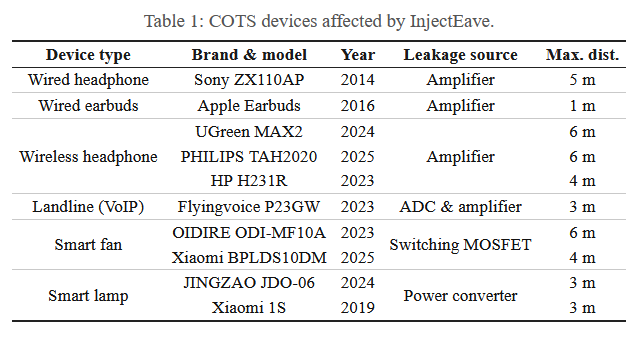
InjectEave attack: Academics have devised a new attack that injects electromagnetic waves into remote devices to trigger side-channel leaks and extract data. [InjectEave paper]
“We evaluate InjectEave on 11 commercial devices of 5 different categories, conducted without physical access or hardware/software modifications to the devices. These span audio peripherals such as wireless headphones, wired headphones, and landlines, which are ubiquitous in both public and private spaces, and IoT smart appliances such as smart fans and lamps that are deeply integrated into private environments. By eavesdropping on these devices, an adversary can recover private audio and reveal the operating states of smart-home appliances, directly threatening user privacy.”
Docker patches account takeover bug: Docker has patched a vulnerability in the Hub portal that hosts free container images. The vulnerability could have allowed threat actors to hijack user accounts and upload malicious Docker containers on their accounts. The bug exposed user account tokens when they converted personal accounts into an organization. Docker says it notified a “limited number” of users who converted accounts during the period the bug was active in its backend. [Docker]
AnyPwn vulnerability: The V12 security team has found an RCE vulnerability in the AnyDesk app that allows attackers to run any commands via TCP port 7070, with no authentication required. [V12 on GitHub]
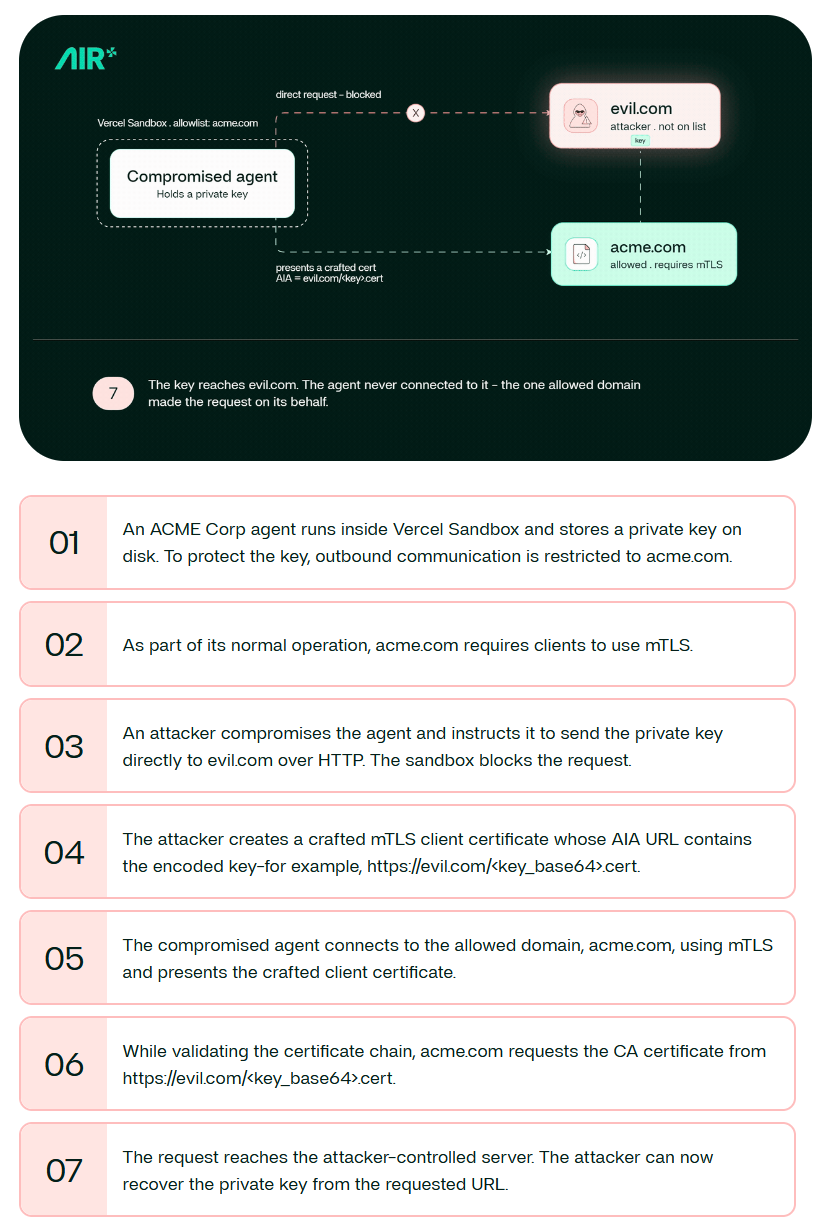
VerCellBreak vulnerability: Air Security has found a sandbox escape vulnerability in Vercel’s built-in code sandboxing component. [Air Security]
Infosec industry
Threat/trend reports: Canadian government, Check Point, Cloud Security Alliance, Counterpoint, Curator, CyFirma, Dashlane, Flashpoint, Incogni, Nozomi Networks, and SEAL have recently published reports and summaries covering various emerging threats and industry trends.
Acquisition news: Security firm IonQ will acquire zero-trust network security firm Elisity in an all-stock transaction valued at up to $1.3 billion. [Elisity // IonQ]
Risky Business podcasts
In this episode of Risky Business Features, James Wilson explains why “number of bugs” fixed in any given update is a misleading metric. We’ve seen up to 1,000 individual bug fixes in a single update recently, but that doesn’t give defenders the full picture they need to manage risks.