Risky Bulletin: Security products start moving out of the Windows kernel

This newsletter is brought to you by Ent AI. You can subscribe to an audio version of this newsletter as a podcast by searching for “Risky Business” in your podcatcher or subscribing via this RSS feed. You can also add the Risky Business newsletter as a Preferred Source to your Google search results by going here.
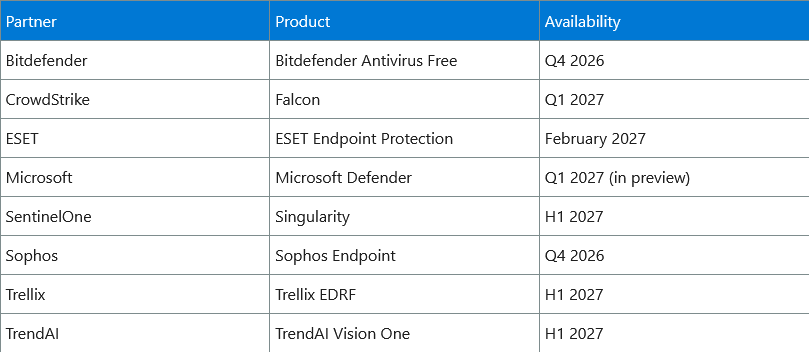
Eight cybersecurity vendors are set to release updated products that will rely far less on Windows kernel drivers.
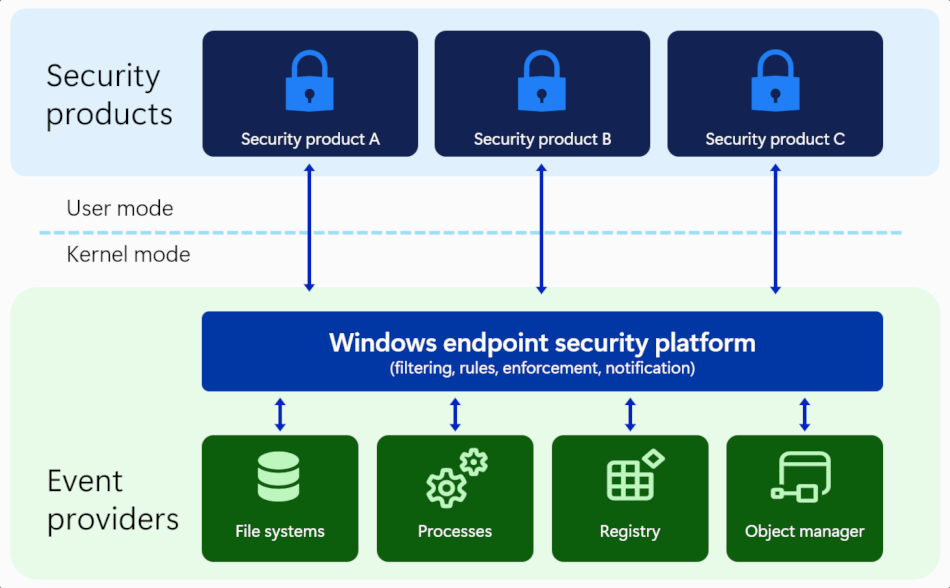
The updated antivirus engines and EDRs will partially transition to the new Windows Endpoint Security Platform, a collection of usermode APIs that provide security tools with the same data they’d usually get from the Windows kernel.
The APIs will retrieve data about the Windows filesystem, processes, the registry, and Object Manager. Security tools will analyze the data and block malicious activity if present.
All of this takes place in the same space a user normally uses, and without the need of a specialized driver to retrieve this data from the depths of the Windows kernel.
Microsoft started developing the Windows Endpoint Security Platform in September 2024, two months after a faulty Crowdstrike kernel driver update crashed 8.5 million PCs.
Major cybersecurity companies were directly involved in designing the product, which was Microsoft’s way of making sure it won’t get accused of favoring Defender compared to its rivals.
Updated security products are set to go live by the end of the year and throughout the first quarter of 2027. Bitdefender and Sophos will release updated products this year, with six other companies having updates planned for next year.
Risky Business Podcasts
The main Risky Business podcast is now on YouTube with video versions of our recent episodes. Below is our latest weekly show with Pat, James and guest co-host Jason Kikta at the helm!
Breaches, hacks, and security incidents
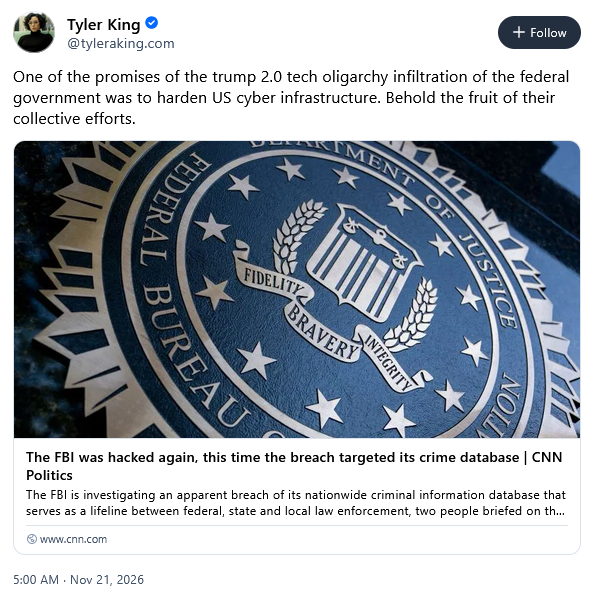
FBI hacked again: Hackers have breached the FBI’s National Crime Information Center. The division manages an FBI national database of active criminal investigation that tracks warrants, fugitives, and is used for background checks. The intrusion is the agency’s second breach this year. The ShinyHunters group breached the agency’s HR portal in September. [CNN]
Security breach at the USDA too: The US Department of Agriculture took offline several applications after its security team discovered a security breach. According to NextGov, the apps were used by the agency to issue payments to American farmers. The apps have been down for more than a week as the agency’s IT team reportedly reset passwords for all databases. [NextGov]
Hackers breach Austrian MOFA: Hackers have breached the Austrian Foreign Ministry and stolen data on its staff. Investigators believe the hackers entered through a third-party provider running its official website. Officials did not yet attribute the attack. [NDTV]
Bulgaria uncovers 5yo espionage op: The Bulgarian government has evicted a cyber-espionage group from its networks. The unnamed group had been inside the state administration’s networks for at least five years and had stolen tens of millions of government documents. Officials said the intruders managed to evade detection due to the government’s fragmented networks and the lack of a single integrated monitoring platform. They also said there was no conclusive evidence to link the hackers to a specific foreign government. [Bulgarian government // Reuters]
Portugal transportation agency suspends all services after hack: Portugal’s transportation agency has temporarily suspended all services to protect its data. The agency said on Friday it was hit by multiple cyberattacks. The IMT says there’s no evidence of data theft. The IMT joins three other Portuguese government bodies targeted by cyberattacks in recent weeks. [IMT // Publico // Euronews]
Japan government file leak: The Japanese government’s Digital Agency says some files leaked online from its file-sharing service. The files were left exposed online for three and a half months, between July 30 and November 12. [Japan Digital Agency]
Microsoft breach: Microsoft has notified customers that a threat actor exploited a vulnerability in the Entra Connect Health API to scrape tenant data. The attacker collected administrator emails and general tenant configuration data. Microsoft says the threat actor exploited an Entra Connect Health API bug introduced through an update in July. The company deployed a fix last week, on Thursday. [BleepingComputer // Reddit]
Bell Canada AI breach: Telecom provider Bell Canada says it’s investigating a breach that appears to have been caused by an AI tool. [CBC]
Hackers breach GL.iNet’s cloud to push malware: A threat actor has breached router maker GL.iNet and deployed malware on the company’s routers and KVM devices. The attacker exploited a vulnerability in its cloud remote management services. GL.iNet released firmware updates on Sunday to remove the malicious code. [GL.iNet]
Nissan’s repair platform offline after hack: A cyberattack has disrupted a Nissan IT platform used by repair shops to diagnose the company’s cars. The platform has been down since November 13. The outage was initially believed to be a technical issue but has since been upgraded to a cybersecurity investigation. Without the platform, repair shops can’t diagnose cars, ship fixes, firmware updates, or replace lost key fobs. [DysruptionHub]
JPMorgan, Visa, Mastercard breaches: JPMorgan, Visa, and Mastercard confirmed that some limited data was stolen from a third-party provider. All three breaches were claimed by the n0n group earlier this month. [CybersecurityDive]
DonorPerfect suspects activity after hack: Fundraising platform DonorPerfect has taken its systems offline after a cyberattack last week. The company has not clarified if any customer or donor data has been stolen. DonorPerfect is slowly bringing systems back online. [DonorPerfect]
Unibet goes down after cyberattack: Online gambling giant FDJ United has taken down its websites after a cyberattack on Friday. The attack hit sports betting platform Unibet as well as several online casinos. The company didn’t provide details on the attack’s nature. [iGamingToday]
Cyberattack takes down Iceland web hosting firm: A cyberattack has disrupted Iceland’s largest web hosting provider. 1984 Hosting shut down services on Friday to protect customer data. Tens of thousands of customer websites are currently offline. The company said the attacker used AI to breach its systems. [Ruv]
Breaking: The 1984 hosting company in Iceland was attacked by someone with lots of money to burn via AI. It happened so fast, that they were forced to shut everything down. They are Iceland’s largest hosting provider and are also one of the safe havens for dissidents worldwide.
— Birgitta Jonsdottir (@birgittaj.bsky.social) 2026-11-20T15:56:46.830Z
Breach at The Container Store: Speciality store chain The Container Store says it recovered systems after a cyberattack last week. [The Record]
Tigerfish leaks transcripts: Tigerfish, a company that provides audio and video transcribing services, has left customer data exposed online, including the transcriptions from law enforcement body cam footage. [TechCrunch]
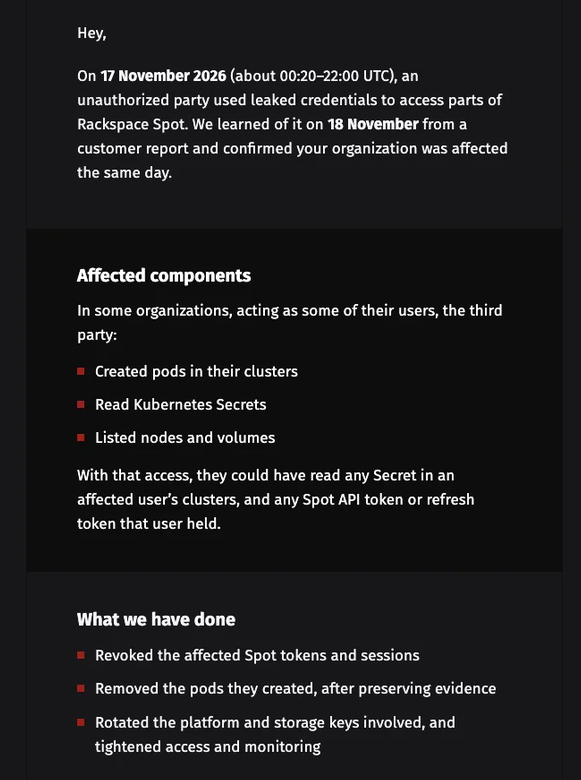
Hackers breach Rackspace Spot: Hackers have breached the Rackspace Spot marketplace for cloud resources. Rackspace says hackers used authentic credentials that were leaked by a third-party. The intruders stole Kubernetes secrets from customer accounts and then deployed their own pods. [BleepingComputer]
General tech and privacy
Signal blocks screenshots because of AI: Signal will update its Android and iOS apps to block AI assistants from taking screenshots of the screen and reading a user’s private conversations. Signal is rolling out the new feature after both Apple and Google announced new AI agentic capabilities for their mobile operating systems. Signal has been blocking screenshots of its app on Windows 11 since last year to block Microsoft’s Recall feature. [Signal]
Android developer verification to go live in January: Google’s Android developer verification program will enter into effect starting January next year. The program requires app developers to register and prove their identity with Google. Only apps from verified developers will be allowed on the official Play Store. The verification program was announced in 2025 and has been under testing in four countries since September. Six other phone makers have also joined Google and will block unverified apps on their respective app stores. Google says millions of apps have been registered and verified globally since March. [Android]
NVIDIA fixes SSD-destroying bug: NVIDIA has released a driver update for some GeForce GPUs that were causing excessive data writing operations to customer SSDs, effectively burning the devices out. [NVIDIA]
Revolut accused of money laundering: Sweden’s Financial Intelligence Unit is investigating neo-payment platform Revolut for laundering money for the Russian government. [Meduza]
Russia is far, far, far from the only sanctioned entity using Revolut to move money.
I still have vivid memory of a conversation I had about a year and a half ago in a gym, of all places, when a certain shady (and I’m being polite) individual boasted to me about opening a bunch…
— Simon Briatka (@simonbetrader) November 21, 2026
Government, politics, and policy
UK discloses secret order: The UK government has been forced by a judge to confirm that it issued a secret order demanding that Apple provide it with access to its customers’ encrypted data. [MacRumors]
UK took its refrigerators offline to avoid hacks: UK cybersecurity officials and security researchers worked together to take offline thousands of industrial fridges across the UK to protect them from hackers. The secret campaign took place last month after hackers destroyed stock worth millions at French supermarkets. Security researchers found similarly insecure fridges in the UK made by British firm Resource Data Management (RDM). They worked with UK cybersecurity agencies to take fridges offline and later with the vendor to roll out a patch. [BBC]
Pentagon warns of CAC-capable malware: The Pentagon has told employees to remove common access cards (CACs) from card readers when they are not actively using them. The Pentagon says the NSA detected malware that records an employee’s card PIN and then abuses card-stored credentials to authenticate on government systems. Officials say the threat is not hypothetical anymore. [Department of War]
US AI Safety and Innovation Caucus: Two dozen US lawmakers, from both parties, have launched an AI safety caucus to investigate risks posed by rapidly evolving AI technology. [The Record]
White House fires national cyber director: The White House on Friday fired National Cyber Director Sean Cairncross. Pentagon Chief Information Officer Kirsten Davies was appointed to take Cairncross’ duties until a replacement is chosen. President Trump reportedly approved the firing after Cairncross allegedly clashed with other officials over AI security. The Senate confirmed Cairncross in August 2025. [White House // CyberScoop // CybersecurityDive]
Q: “Why did you fire the cyber chief though yesterday?”
President Trump: “Because I didn’t think that person was good enough.” pic.twitter.com/9hwDFOD35x
— CSPAN (@cspan) November 20, 2026
Sponsor section
In this Risky Business sponsor interview, Catalin Cimpanu talks with Brandon Dixon, co-founder and CTO of Ent AI, about the rise of a new insider threat, the AI agent.
Arrests, cybercrime, and threat intel
Spain arrests NoName057 members: Spain’s national police have detained a member of the NoName057 pro-Kremlin hacktivist group. The suspect created the group’s first physical cell in Spain and was recruiting other members. He was also involved in online channels where he called for cyberattacks against the government and violence against police. Authorities discovered a copious amount of weapons and ammunition at his home. [Spain National Police]
🚩La @policia.es frustra la implatación de la primera célula en #España de la organización ciberterrorista NoName057(16)
🔹Realizaba labores de propaganda, enaltecimiento y captación
🔹Promovía en RRSS #ciberataques contra instituciones del Estado y llamamientos a enfrentarse a la #policía
Russia charges data brokers running scheme from prison: Russian authorities have charged three suspects with large-scale trafficking of personal data. One of the suspects ran the scheme while serving a sentence in a correctional colony. The other two suspects carried messages out of prison and executed his orders. The group made almost $50,000 from the scheme. [MVD]
DOJ indicts RansomwareHelp operator: The US Department of Justice has charged the operator of a Florida business that helped companies recover from ransomware attacks. Juan Ricardo Palacio Escobar operated the RansomwareHelp.com service where he claimed he was reverse-engineering the ransomware and decrypting a victim’s files. The DOJ says that in reality, Escobar was paying ransomware groups, adding his cut on top, and decrypting files with the attacker’s keys. [KrebsOnSecurity // 404 Media]
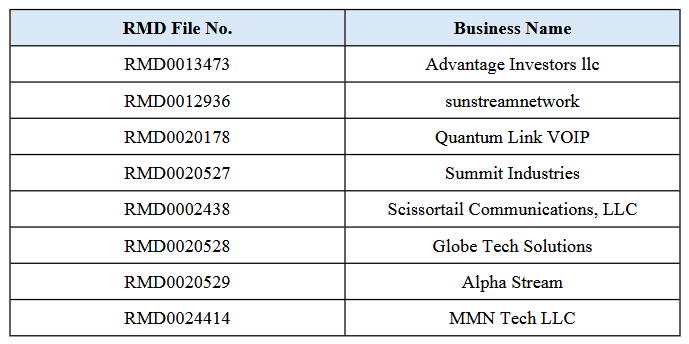
FCC removes eight providers from US telco network: The US Federal Communications Commission has removed eight companies from the US telecommunications network. The eight providers failed to respond to requests for information about suspected illegal robocalls. The agency says it has removed more than 1,400 companies from US telco networks since January 2025 for failing to follow robocall mitigation rules. [FCC]
India detains 14yo hacker: New Delhi police have arrested a 14-year-old boy for hacking and selling government data. The teen is accused of breaching Agniveer, a military recruitment and training program. Officials say the suspect was selling the data of 4,000 Agniveer users on the dark web for $500. [The Print]
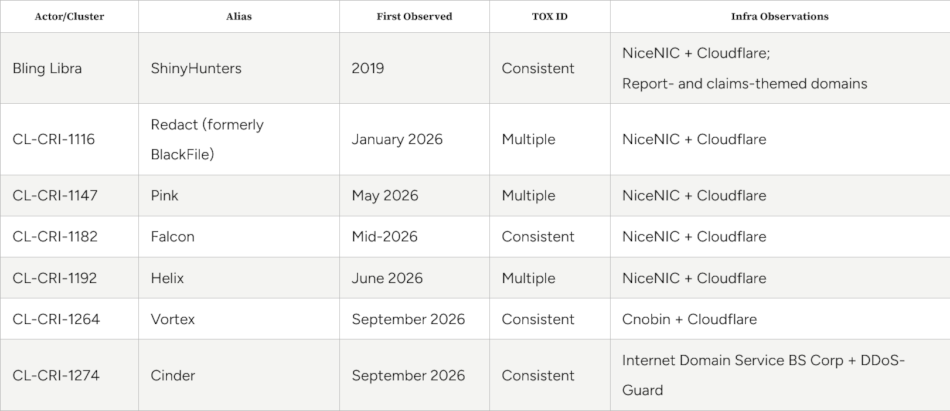
The Com’s clusters: Palo Alto Networks is now tracking seven distinct vishing clusters that appear to have ties with underground community The Com. [Unit42]
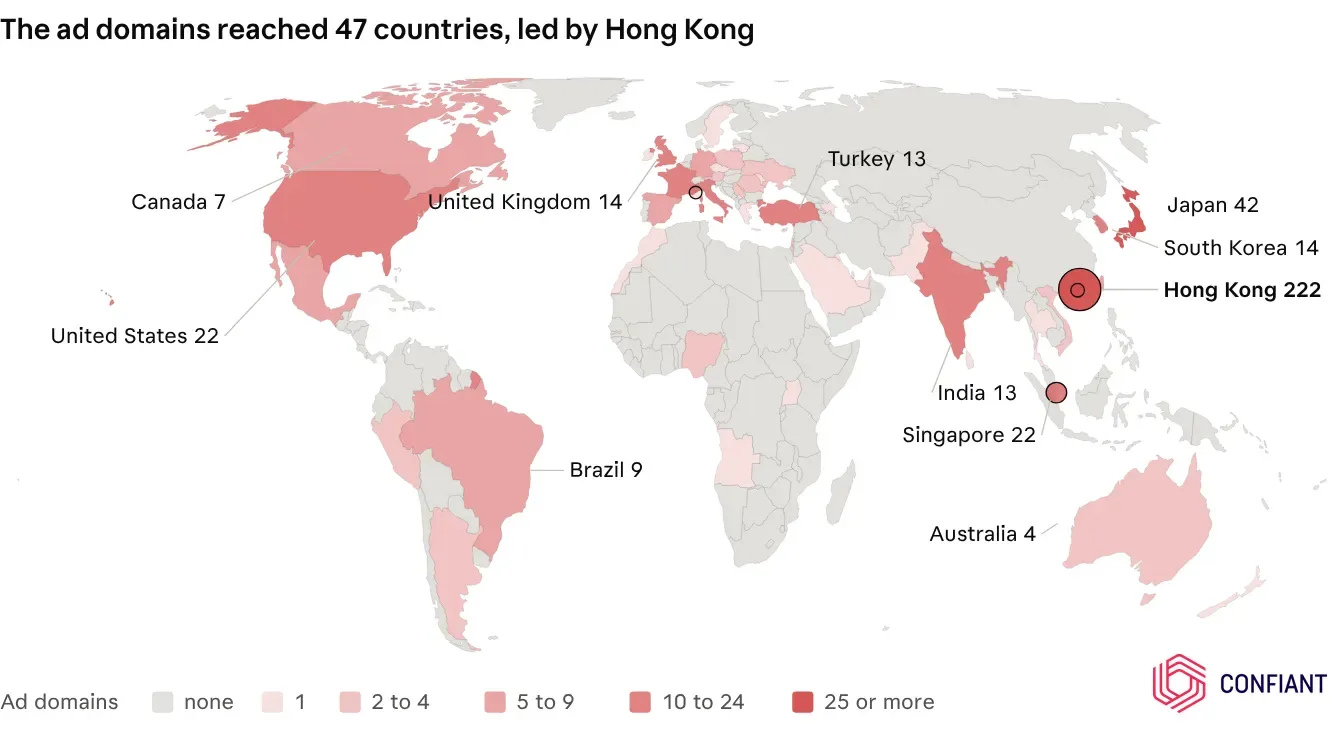
MoldyRoost malvertising operation: A massive malvertising operation has targeted iOS users with exploits for more than half a year. The MoldyRoost campaign bought programmatic ads at scale and redirected users to more than 480 domains hosting iOS exploit kits. MoldyRoost used Coruna, DarkSword, SilkPath, and GhostWave—four exploits kits that specifically target users with unpatched old iPhones all over the world. The exploit kits delivered malware to steal crypto wallet seed phrases, keychain data, messages, and photos. [Confiant]
GoodGuys campaign: Security researchers have spotted a phishing campaign targeting experts across various fields with paid expert interviews and webinar invitations in the name of known brands like Accenture, Nvidia, SpaceX, and Google Cloud. [Push Security]
React2STEAL campaign: A threat actor has developed a novel automated hacking framework that works on top of GitHub Actions. The attacker is using compromised Github repositories to abuse their GitHub Actions feature and scan and exploit Node.js servers for known vulnerabilities. The scans have targeted React2Shell and a Node.js authorization bypass. According to the OpenSourceMalware team, the campaign has scanned over 20,000 servers and successfully compromised 277. [OpenSourceMalware]
New CAIRN abuse: AWS says that a Chinese threat group is using the CAIRN AI penetration testing to automate intrusions. In one case, the attacker found and exploited a zero-day in a medical imaging library to breach a target’s network. [AWS]
Gil profile: Threat intel firm Golden Owl has published a profile on Enrique Arias Gil, a Spanish teacher who joined NoName057 and later fled to Russia once authorities charged him. The report also covers the group’s ties with R-Techno, a Russian company linked to a former FSB officer. [Golden Owl]
BankWeaver campaign: A hacking campaign is targeting Temenos Quantum Fabric deployments to gain access to private corporate networks. [Forescout]
BabidiGhost: A French-speaking threat actor spent nine days this month targeting European banks, insurers, payment providers, and municipalities using a jailbroken AI agent. [SOCRadar]
Malware technical reports
KuinaExtractor: Something we missed back in June was this report on the new (back then) KuinaExtractor infostealer. [ThreatRay]
EasyShell: Security researchers have discovered a new Chinese red team C2 framework with implants for macOS and Linux. [MalwareMustDie]
ARTEX: Since ARTEX is everywhere these days, here’s two more reports on it. [7ai // Intrinsec]
BYOD ransomware: Trend Micro looks at the new BYOD ransomware group, who in only a few weeks has managed to string quite the collection of victims. [Trend Micro]
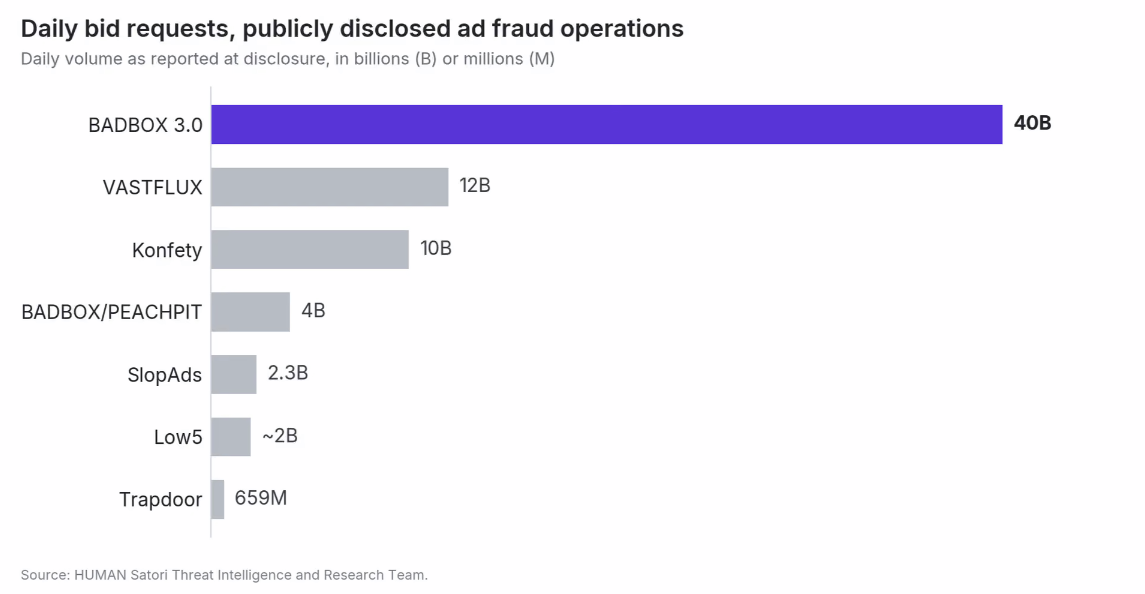
BADBOX botnet linked to Chinese electronics maker TXCZ: Security researchers have linked a new version of the BADBOX ad fraud botnet to Chinese electronics manufacturer TXCZ. The company’s domains and GitHub repositories are directly involved in hosting command-and-control infrastructure and deploying payloads. Human Security says it found the malware on TV set-top boxes, where it loaded and ran video ads in the background. BADBOX also installed a proxy module on the TVs and turned them into exit nodes for the PXYEDGE proxy service. Human Security says it worked to take down the company’s infrastructure. This is the third BADBOX version that researchers have disrupted over the past two years. [Human Security]
Sponsor section
In this edition of the Snake Oilers podcast, Ent AI co-founder Brandon Dixon introduces the company’s intent-aware, AI-powered endpoint security control.
APTs, cyber-espionage, and info-ops
Dougan now works with China too: John Mark Dougan, the former US marine and sheriff’s deputy who fled to Russia to work with its disinformation groups, is apparently also managing influence operations on behalf of China, according to a new report. [NewsGuard]
Meta removes Chinese info-op: Meta has removed more than 2,700 Threads accounts that the Taiwanese government reported as being part of an info-op to influence its elections. [Reuters]
Vulnerabilities, security research, and bug bounty
Security updates: Apache Tomcat, ASUS, AWS, Bitwarden, Bun, Cisco, F5, Ghostscript, GnuPG, Kubernetes, Mitel, Moodle, Moxa, OpenVPN, WhatsApp, WordPress.
Upload2Shell vulnerability: A vulnerability known as Upload2Shell can allow attackers to take over apps and websites that use Ghostscript to process some user uploads. [Pwn.ai // Ghostscript]
ChatGPT Sites vulnerability: HiddenLayer identified an issue in ChatGPT Sites where some accounts authenticated through OAuth were assigned website namespaces derived from their email addresses. [HiddenLayer]
WhatsApp fixes bug abused for spam: Meta has fixed an WhatsApp bug that was being abused to send authentic-looking spam messages. The bug only impacts the company’s Android clients. According to SecurityWeek, Meta found the bug while disrupting a cyber scam operation. [WhatsApp // SecurityWeek]
KEV update: CISA has updated its KEV database with four vulnerabilities that are currently exploited in the wild. This includes:
- CVE-2025-42884 – SAP NetWeaver Improper Neutralization of Special Elements in Data Query Logic Vulnerability
- CVE-2026-76466 – Cisco Expressway Series Use of Hard-coded Credentials Vulnerability
- CVE-2026-123890 – VMWare vCenter Authentication Bypass Using an Alternate Path or Channel Vulnerability
- CVE-2026-129448 – Apache Roller Deserialization of Untrusted Data Vulnerability
GnuPG fixes GPGME RCE: The GnuPG project has fixed a vulnerability in the GPGME library that could, in certain scenarios, be exploited for RCE attacks. This impacts everything from email encryption to Samba and XMPP. [GnuPG]
There’s a critical vulnerability in GPGME announced today, so take your updates if you have the misfortune of still having GPG in your life
— Kevin Riggle (@kevinr.free-dissociation.com) 2026-11-20T21:13:25.403Z
Infosec industry
Threat/trend reports: BlackFog, Check Point, Cobalt, EU EDPS, Entrust, KnowBe4, Peak Metrics, and Rubrik have recently published reports and summaries covering various emerging threats and industry trends.
Acquisition news: Rumor on the street is that CrowdStrike is trying to buy Zscaler, one of its main rivals. [Bloomberg]
New tool—AI Hacking Incidents: Daniel Miessler has created AI Hacking Incidents, a public ledger of all known AI-caused security incidents.
WWHF 2026 videos: Talks from the Wild West Hackin’ Fest 2026 Deadwood security conference, which took place last month, are available on YouTube.
USENIX Security 2026: Talks from the USENIX Security 2026 security conference, which took place in August, are available on YouTube.
USENIX WOOT 2026: Talks from the USENIX WOOT 2026 security conference, which took place in August, are available on YouTube.
USENIX VehicleSec 2026: Talks from the USENIX VehicleSec 2026 security conference, which took place in August, are available on YouTube.
Pacific Hackers 2026: Talks from the Pacific Conference 2026 security conference, which took place at the start of the month, are available on YouTube.
Risky Business podcasts
In this episode of Risky Business Features, James Wilson looks at where the ARTEX hacking agent came from, what it borrows from CAIRN and how the AntiFox fork builds on it. He then gets under ARTEX’s hood to explain how it splits up investigations, how its agents share what they learn and how they decide what to try next.
Originally published on Risky Business News