Anti-Putin messages disrupt nationwide school assessments in Russia
A pro-Ukraine group that says it operates within Russia took responsibility for anti-Putin messages appearing on an education assessment platform. Authorities said they had restored systems.
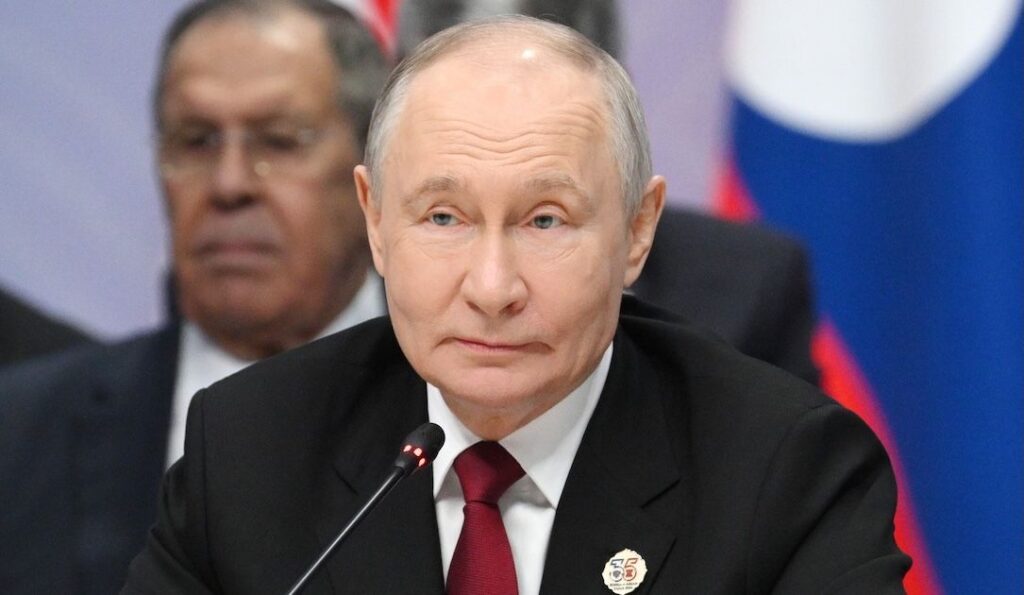
Russia’s education watchdog says it has restored its online systems following a cyberattack that disrupted nationwide school assessments and displayed messages urging students to join an underground movement against President Vladimir Putin.
The attack last Friday forced Rosobrnadzor to suspend assessments at schools and vocational education institutions across the country. Students completing questionnaires on the agency’s Edutest platform were shown anti-government messages instead of questions, according to Russian officials.
Rosobrnadzor said on Monday the attacks targeted its online resources and those of the Federal Institute for Education Quality Assessment (FIOKO), a subordinate organization responsible for assessing education standards.
A pro-Ukrainian hacking group calling itself Black Spark claimed responsibility for the disruption. The group describes itself as an underground resistance movement operating inside Russia and has previously claimed responsibility for attacks against Russian technology companies.
Ekaterina Mizulina, a controversial pro-Kremlin activist who heads Russia’s Safe Internet League, said she had received reports from students at schools across the Moscow region who encountered the messages while taking the assessments.
“Halfway through the assessment, when they moved on to another question, the same image appeared on everyone’s screens, urging them to take part in anti-government activities,” Mizulina wrote, sharing a photograph that appeared to show the message on school computers.
The disruption coincided with a major stage of the nationwide assessment program, during which 9th grade students in 29 Russian regions were scheduled to complete questionnaires, according to local media reports.
The assessments, which began October 12 and were scheduled to continue through October 29, examine the quality of education, school safety, students’ psychological well-being, and their attitudes and values. They also evaluate students’ ability to apply their knowledge in areas such as mathematics, science, reading and financial literacy.
The results are used to evaluate educational institutions rather than individual students and do not affect school grades or graduation eligibility.
Rosobrnadzor did not disclose how the attackers gained access to the assessment platform or whether any information was stolen.
In a statement published Saturday, Black Spark claimed that Russian schoolchildren had welcomed the disruption and sent the group numerous messages of support. The hackers, however, denied seeking to recruit minors into their activities.
“Under no circumstances does our movement recruit children into its activities, and we categorically oppose any attempts to involve minors in the war,” the group said.
The group nevertheless encouraged adults to join its campaign against the Russian government.
Black Spark has previously claimed responsibility for attacks on Russian technology infrastructure. In August, the group said it had breached Russian software developer Microolap. The company acknowledged that some of its systems had been compromised but disputed the hackers’ claims that they had accessed its network monitoring platform or stolen data belonging to major Russian companies.